


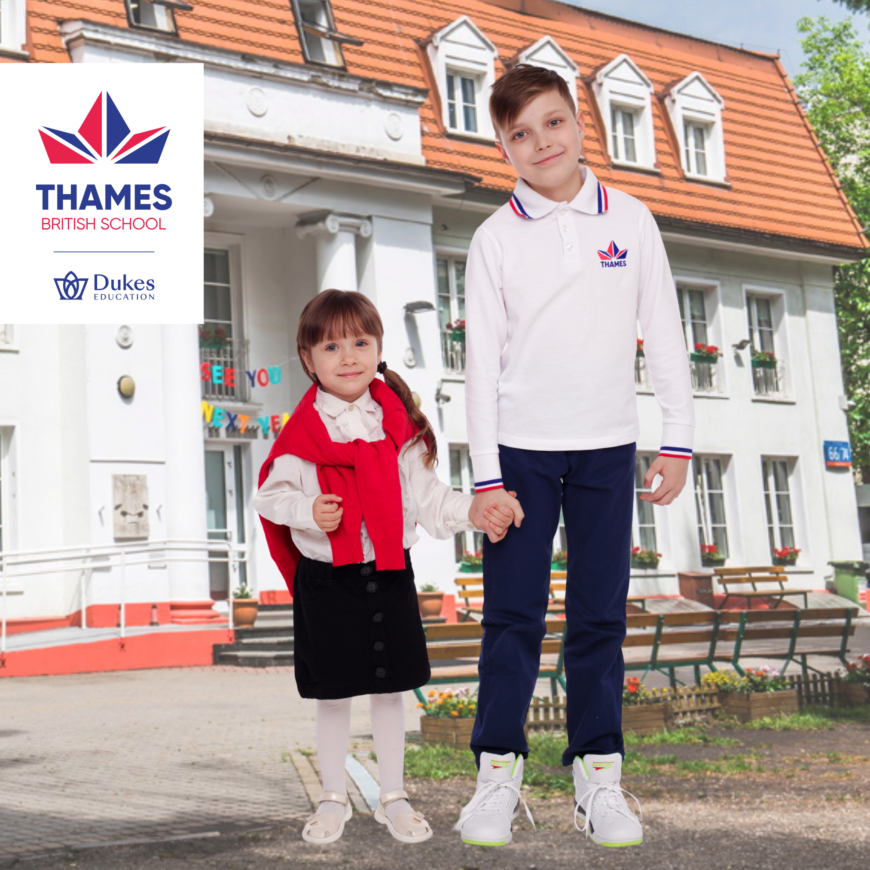
Choosing the right school for your child is one of the most important decisions a family will ever make, shaping not just their education, but their future opportunities and personal growth. For families exploring options including a private school in Warsaw or a British school in Warsaw, it’s important to understand how the British curriculum compares with the Polish education system. Both offer solid foundations, but they differ in teaching approaches, assessment methods, curriculum design, and the global opportunities they open up for students.
Core Focus and Educational Philosophy
At Thames British School Warsaw, the British curriculum goes beyond traditional academics, aiming to develop not just knowledge, but the skills and mindset students need to thrive in a rapidly changing world. It nurtures critical thinking, creativity, and independent learning, encouraging students to ask bold questions, explore ideas deeply, and connect their learning to real-world challenges.
In contrast, the Polish education system takes a more traditional, exam-focused approach. While students gain strong knowledge in core subjects, the learning style is often more teacher-led, with less emphasis on enquiry-based learning or independent problem-solving. This difference highlights how the British curriculum fosters curiosity, initiative, and global readiness from an early age.
Curriculum and Key Subjects
On paper, the subjects taught in Polish schools and British schools may seem similar — both cover maths, sciences, languages, arts, and physical education. In Poland, primary students study core subjects like Polish, maths, English, PE, and religion, gradually adding sciences and a second foreign language. By secondary school, students follow a structured curriculum including two foreign languages, humanities, sciences, arts, technology, IT, and PE. The system is largely standardised, with a strong focus on exams and national standards.
By contrast, the British curriculum at Thames British School Warsaw, a leading private school in Warsaw, offers the same breadth but with far greater flexibility and choice. Students still study core subjects such as English, maths, and sciences, but they can select optional subjects or enrichment courses in areas like creative arts, technology, and modern languages. Lessons emphasise critical thinking, problem-solving, and real-world application. Assessment includes projects, presentations, coursework, and exams rather than relying solely on final tests.
Language learning is a priority in both systems, but in a British school, it is integrated with cultural awareness and practical use. This prepares students to communicate confidently across the globe. The combination of structured learning, personalised choices, and skill-based development gives students not just knowledge, but the independence, curiosity, and adaptability they need to thrive in higher education and beyond.
Assessment and Progression
Assessment looks very different in the two systems. In the British curriculum, students are evaluated through a mix of coursework, projects, presentations, and teacher-led assessments. This provides ongoing feedback and opportunities to grow, reinforcing learning while building confidence, creativity, and independent thinking.
By contrast, the Polish system relies heavily on final exams and national tests. While this ensures strong subject knowledge, it often prioritises memorisation over problem-solving and critical thinking, giving students less opportunity to develop the independent learning skills that are essential for success in higher education and global careers.
Global Recognition and Opportunities
For families with aspirations for international higher education, a British school in Warsaw can open doors around the world. Qualifications such as iGCSEs, A Levels, and the IB Diploma are widely recognised by universities globally, providing students with flexible pathways to study abroad. While the Polish system prepares students well for local and EU universities, its qualifications may be less familiar to institutions outside Europe. Choosing a British curriculum gives students a head start in pursuing global opportunities and developing the skills and credentials that universities everywhere value.
Choosing the Best Fit
Selecting the right school depends on your child’s learning style and your family’s long-term goals. At Thames British School Warsaw, a leading international school in Warsaw, the British curriculum is delivered in a supportive environment, combining academic rigour with personal growth to prepare students for university and life beyond the classroom.
Ready to explore the benefits of a British education in Warsaw? Learn more about Thames British School Warsaw here.
Share this news on


